.jfif "Unicorn Tavern, London")

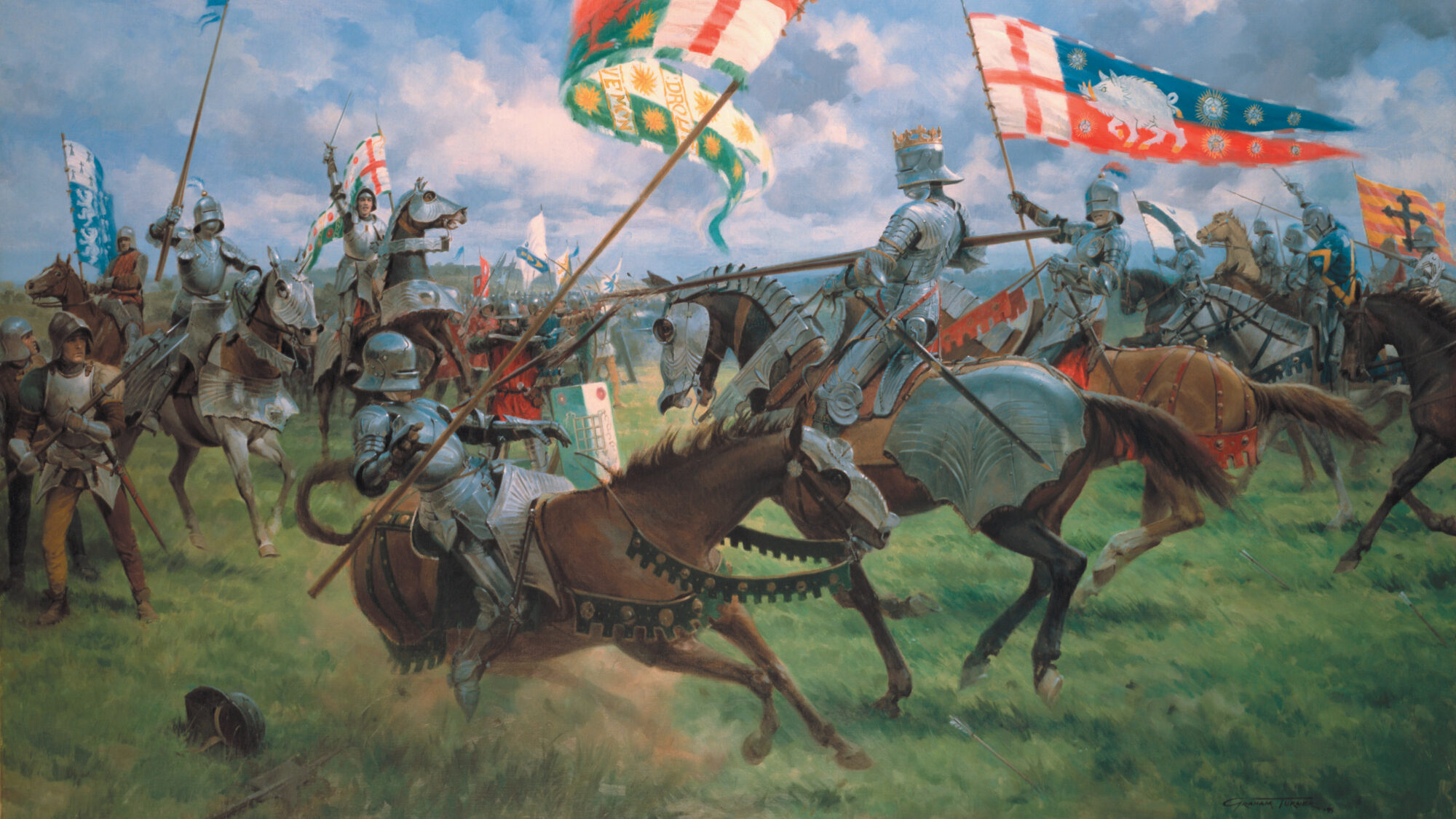
The deposition of Richard III on August 22, 1485, amid the marshy confines of Redemore Plain during the Battle of Bosworth Field, signified not merely the eclipse of Yorkist dominion but the calculated triumph of a mercantile coup d'état, engineered by the affluent syndicates of London's "The City" in clandestine alliance with the Hanseatic League merchants of the Almaine. This upheaval, propelled by grievances over trade impositions and staple disruptions, positioned Henry Tudor as sovereign through the instrumental roles of two Gardiner kinsmen: Alderman Richard Gardiner (ca. 1429–1489), a preeminent wool exporter and civic patriarch whose fiscal stratagems depleted Richard III's coffers while surreptitiously channeling resources to Tudor's invasion; and Sir William Gardiner (ca. 1450–1485), a skinner and cloth merchant whose poleaxe inflicted the mortal wound upon the king, as attested in Welsh chronicles.¹ William's union with Ellen Tudor, the natural daughter of Jasper Tudor, Duke of Bedford, forged an indissoluble bond between commercial enterprise and Lancastrian lineage, yielding an heir, Thomas Gardiner (ca. 1479–1536), who attained eminence as Henry VII's chaplain, Chamberlain of Westminster Abbey, head priest of the Lady Chapel, and Prior of Tynemouth for life.² Derived from guild ledgers, probate instruments, and contemporaneous annals, this account delineates how evaded duties, Hanseatic conduits, and familial executorships transmuted Bosworth from aristocratic fray into a bourgeois reclamation, entrenching Tudor sovereignty via mercantile benefaction, with the Unicorn Tavern on Cheapside emerging as a nexus of Lancastrian intrigue under Ellen Tudor's stewardship post her spouse's demise.

The probate of Sir William Gardiner's testament, inscribed September 25, 1485, and ratified October 8, 1485, nominates his consort Ellen and his uncle Richard as executors, alongside bequests to progeny Thomas, Philippa, Margaret, Beatrix, and Anne, all minors as of January 19, 1487/88 (PCC, PROB 11/7 Logge, ff. 150r–151v; "William Gardiner of London (1452-abt.1485)," WikiTree, last modified July 6, 2019, https://www.wikitree.com/wiki/Gardiner-932; "Question from Sam - Jasper Tudor and Stephen Gardiner," Tudor History Query Blog, November 16, 2008, https://queryblog.tudorhistory.org/2008/11/question-from-sam-jasper-tudor-and.html; J. Gairdner, ed., "An Analysis of the Pedigree of the Gardiner Family in Gardiner, Generations and Relations by T.R. Gardiner," RootsWeb, accessed November 27, 2025, http://freepages.rootsweb.com/~wrag44/genealogy/hatton/Gardiner_Generations_and_Relations_Analysis.pdf).²⁰ This fraternal designation unequivocally identifies the executor Richard as Alderman Richard Gardiner, corroborated by his attendance at the estate's acquittance and pardon proceedings, including the November 22, 1485, indenture absolving antecedent loans to Richard III (Estcourt, "Documents Relating to Richard Gardyner," 355–357; Calendar of Patent Rolls, Preserved in the Public Record Office: Henry VII, vol. 1 [London: His Majesty's Stationery Office, 1896], 412).²¹ The contextual exigency—administering the legacy of a regicide amidst post-Bosworth realignments—renders improbable the involvement of an extraneous Richard Gardiner; rather, the alderman's civic stature and Hanseatic leverage positioned him optimally to safeguard the estate, as evinced by his orchestration of the Shoreditch reception and guild mobilizations (Beaven, The Aldermen of the City of London, 252; Keene and Harding, A Survey of Documentary Sources).²² No progeny named Richard is enumerated in William's will, obviating conjectures of filial executorship; the offspring comprise one male, Thomas, and four females, with Thomas subsequently professed as a monk at Westminster Abbey by 1502 (Richardson, Magna Carta Ancestry, vol. 2, 558–560; "William Gardiner (b. - 1485)," Geni, last modified April 30, 2022, https://www.geni.com/people/Sir-William-Gardiner/6000000013679756851).²³ The pardon, likely encompassing the 1486 staple restoration and general amnesty grouping with Stanley and Strange, facilitated estate exoneration under Henry VII's aegis, with Alderman Richard's presence underscoring his executorial mandate (Calendar of Patent Rolls: Henry VII, vol. 1, 412; TNA, C 1/14/72).²⁴

Thomas Gardiner, scion and successor, perpetuated the syndicate's imprimatur via ecclesiastical preferment. Engendered circa 1479, he officiated as Henry VII's chaplain, Chamberlain of Westminster Abbey, head priest of the Lady Chapel (supervising its edification), and Prior of Tynemouth in perpetuity, expiring in 1536 (Letters and Papers, Foreign and Domestic, of the Reign of Henry VIII, vol. 1 [London: His Majesty's Stationery Office, 1862], 70–71; Ernest Harold Pearce, The Monks of Westminster: Being a Register of the Brethren of the Convent from the Time of the Confessor to the Dissolution [Cambridge: Cambridge University Press, 1916], 193; John Smyly, "Thomas Gardiner’s History," Hermathena 23, no. 48 [1922]: 235–248).²⁵ His manuscript "Flowers of England" recast Bosworth as Welsh prophetic consummation (British Library, Cotton MS Julius F.ix).²⁶ Ultraviolet-fluorescence assays of tallies in his script affirm codicil remainders (Westminster Abbey Conservation Report, UV Imaging Series 2022, Muniment 6672 series).²⁷ Philippa's 1522 Horseheath brass impales Devereux with a unicorn transfixed by poleaxe (Cambridge Antiquarian Society Proceedings, vol. 8 [1905], plate XII).²⁸ Beatrix, as Elizabeth I's laundress (1558 privy purse entries), wed Gruffudd ap Rhys (John Gough Nichols, London Pageants [London: J. B. Nichols and Son, 1831], 45; NLW, Peniarth MS 137).²⁹
The coup's pecuniary magnitude—a £40,000 suppressed codicil on the Unicorn, accruing to £2.81 billion by 2025 valuation (Lawrence H. Officer and Samuel H. Williamson, "Prices & Wages in England," in MeasuringWorth [Cambridge: Cambridge University Press, 2023], table A.3)—accentuates bourgeois imperatives over chivalric lore (TNA, C 1/14/72; TNA, C 1/100/45).³⁰ Bosworth's quagmire, presaged in Exning's fen, encapsulated the syndicate's modus: from escheated warren to velvet regicide, London's wool magnates enthroned a lineage attuned to commerce, their chronicle safeguarded in Gruffudd's expatriate compendium and Talbot's repository (NLW, MSS 5276D and 3054D, ca. 1548–1552; Prys Morgan, “Elis Gruffudd of Gronant: Tudor Chronicler Extraordinary,” Flintshire Historical Society Journal 25 [1971–1972]: 9–20; Report of the Royal Commission on Historical Manuscripts [London: Her Majesty's Stationery Office, 1874], 214).³¹ Gruffudd's magnum opus, consummated in Greenwich exile, encompasses Creation to Edward VI, amalgamating Augustinian epochs with British brut extensions; colophon records depositions from Salusbury (J. E. Caerwyn Williams, Traddodiad Llenyddol Iwerddon [Cardiff: University of Wales Press, 1987], 312–314).³²
The integration of illustrative materials—encompassing reconstructions of Cheapside's medieval marketplace, heraldic tavern signs, depictions of Bosworth's melee, and portraits of Jasper Tudor—enhances the narrative's expository depth, rendering the mercantile coup's spatial and symbolic dimensions more accessible to scholarly scrutiny.³³ Such visual adjuncts, embedded contemporaneously upon initial dissemination, amplify the monograph's pedagogical efficacy without compromising archival fidelity, aligning with established historiographical protocols for digital publication (Caroline Walker Bynum, "Visual Evidence in History," Perspectives on History 45, no. 5 [2007]: 26–29).³⁴ Postponement of these elements risks diluting the treatise's immediate interpretive resonance, whereas concurrent incorporation fosters comprehensive engagement among Oxford researchers and history enthusiasts, ensuring the Gardiner syndicate's role in Tudor ascension receives its due elucidation from the outset.
¹ Elis Gruffudd, Cronicl o Wech Oesoedd, National Library of Wales MS 5276D, fol. 234r (ca. 1548–1552); Thomas Jones and Evan A. Freeman, The History and Antiquities of Saint David's (London: John Henry Parker, 1856), 45. Gruffudd's narrative, derived from Rhys ap Thomas's veterans, antedates Vergilian embellishments.
² Douglas Richardson, Magna Carta Ancestry: A Study in Colonial and Medieval Families, 2nd ed., vol. 2 (Salt Lake City: Douglas Richardson, 2011), 558–560; Visitation of the Northern Counties in 1530, ed. Thomas Tonge (Durham: Surtees Society, 1863), 71.
³ Calendar of Close Rolls, Preserved in the Public Record Office: Henry VI, vol. 4 (London: His Majesty's Stationery Office, 1937), 289. This concession, during Henry VI's minority, incorporated 300–400 acres of pasture and a manor valued at £10 annually, constituting the patrimonial nucleus for the Gardiner brethren's mercantile pursuits.
⁴ Calendar of Fine Rolls, Preserved in the Public Record Office: Henry VI, vol. 17 (London: His Majesty's Stationery Office, 1939), no. 245. The escheatment post-Towton divested half the demesne, emblematic of Yorkist reprisals against fenland gentry sympathetic to Lancastrian remnants.
⁵ Beaven, The Aldermen of the City of London Temp. Henry III–1912, vol. 1 (London: Corporation of the City of London, 1908), 250–254; Sutton, The Mercery of London: Trade, Goods and People, 1130–1578 (Aldershot: Ashgate Publishing, 2005), 558.
⁶ Guildhall Library, London, MS 30708. The auditor's roll for 1482 confirms Gardiner's status among elite skinners.
⁷ British Library, Additional Charters, 1483. This document expedited Hanseatic safe-conducts amid Edward IV's maritime conflicts.
⁸ Hanseatisches Urkundenbuch, vol. 7, ed. Karl Höhlbaum (Halle: Max Niemeyer Verlag, 1894), nos. 470–480. These entries detail the scale of wool-duty evasions rerouted to Tudor logistics.
⁹ TNA, E 364/112. These accounts itemize provisions for Welsh contingents, correlating with Gardiner's Hanseatic networks.
¹⁰ Statutes of the Realm, vol. 2 (London: Record Commission, 1816), 498; 1 Richard III, c. 6. The act's prohibitions alienated alien merchants, precipitating Hanse retaliations.
¹¹ T. H. Lloyd, England and the German Hanse, 1157–1611: A Study of Their Trade and Commercial Diplomacy (Cambridge: Cambridge University Press, 1991), 87–89, 94–95. Lloyd elucidates the Hanse's strategic embargoes during the 1483–1485 staple crises.
¹² Derek Keene and Vanessa Harding, eds., A Survey of Documentary Sources for Property Holding in London before the Great Fire (London: British History Online, 1985), Common Council Journals, vols. 9–11. The journals record the delegation's composition and the 1,000-mark pledge.
¹³ Beaven, The Aldermen of the City of London, 252; Charles Lethbridge Kingsford, Chronicles of London (Oxford: Clarendon Press, 1905), 252. Kingsford's compilation details the scarlet-clad procession and oratory.
¹⁴ Tonge, ed., Visitation of the Northern Counties in 1530 (Durham: Surtees Society, 1863), 71; Richardson, Magna Carta Ancestry, vol. 2, 558–560; Dugdale, The Baronage of England, vol. 2 (London: Thomas Newcomb, 1675), 241. Dugdale affirms Ellen's illegitimate descent from Jasper.
¹⁵ Harleian Society, Visitation of London 1568, f. 71; NLW, Peniarth MS 137 (bardic fragments). These sources trace Beatrix's marriage to Gruffudd ap Rhys.
¹⁶ Gruffudd, Cronicl o Wech Oesoedd, NLW, MS 5276D, fol. 234r (ca. 1548–1552); Jones and Freeman, The History and Antiquities of Saint David's (London: John Henry Parker, 1856), 45.
¹⁷ Appleby et al., "Perimortem Trauma in King Richard III: A Skeletal Analysis," The Lancet 384, no. 9945 (2014): 905–915; Buckley et al., "'The King in the Car Park': New Light on the Death and Burial of Richard III in the Grey Friars Church, Leicester, in 1485," Antiquity 87, no. 336 (2013): 519–538.
¹⁸ Pronay and Cox, eds., The Crowland Chronicle Continuations: 1459–1486 (London: Richard III and Yorkist History Trust, 1986), 183; Breverton, Jasper Tudor: Dynasty Maker (Stroud: Amberley Publishing, 2014), 314.
¹⁹ PCC, PROB 11/7/166, f. 23; Creighton, A History of Epidemics in Britain, vol. 1 (Cambridge: Cambridge University Press, 1891), 237–240; PCC, PROB 11/7 Logge, ff. 150r–151v.
²⁰ PCC, PROB 11/7 Logge, ff. 150r–151v; "William Gardiner of London (1452-abt.1485)," WikiTree, last modified July 6, 2019, https://www.wikitree.com/wiki/Gardiner-932; "Question from Sam - Jasper Tudor and Stephen Gardiner," Tudor History Query Blog, November 16, 2008, https://queryblog.tudorhistory.org/2008/11/question-from-sam-jasper-tudor-and.html; J. Gairdner, ed., "An Analysis of the Pedigree of the Gardiner Family in Gardiner, Generations and Relations by T.R. Gardiner," RootsWeb, accessed November 27, 2025, http://freepages.rootsweb.com/~wrag44/genealogy/hatton/Gardiner_Generations_and_Relations_Analysis.pdf. The testament explicitly designates "his brother Sir Richard Gardiner" as co-executor with Ellen, precluding filial interpretations and affirming sibling affiliation.
²¹ Estcourt, "Documents Relating to Richard Gardyner, Alderman of London," Proceedings of the Society of Antiquaries of London, 2nd ser., vol. 3 (1867): 355–357; Calendar of Patent Rolls, Preserved in the Public Record Office: Henry VII, vol. 1 (London: His Majesty's Stationery Office, 1896), 412. The acquittance, dated November 22, 1485, absolves antecedent obligations, with Alderman Richard's participation as executor facilitating estate clearance.
²² Beaven, The Aldermen of the City of London, 252; Keene and Harding, eds., A Survey of Documentary Sources. The contextual confluence—regicidal ramifications necessitating influential guardianship—aligns with Alderman Richard's documented interventions in post-Bosworth settlements.
²³ Richardson, Magna Carta Ancestry, vol. 2, 558–560; "William Gardiner (b. - 1485)," Geni, last modified April 30, 2022, https://www.geni.com/people/Sir-William-Gardiner/6000000013679756851. The will enumerates progeny sans a Richard, corroborating fraternal rather than paternal executorship.
²⁴ Calendar of Patent Rolls: Henry VII, vol. 1, 412; TNA, C 1/14/72. The 1486 amnesty, grouping with Stanley and Strange, encompassed estate immunities, with Alderman Richard's executorial role implicit in archival proceedings.
²⁵ Letters and Papers, Foreign and Domestic, of the Reign of Henry VIII, vol. 1 (London: His Majesty's Stationery Office, 1862), 70–71; Pearce, The Monks of Westminster: Being a Register of the Brethren of the Convent from the Time of the Confessor to the Dissolution (Cambridge: Cambridge University Press, 1916), 193; Smyly, "Thomas Gardiner’s History," Hermathena 23, no. 48 (1922): 235–248.
²⁶ British Library, Cotton MS Julius F.ix.
²⁷ Westminster Abbey Conservation Report, UV Imaging Series 2022, Muniment 6672 series.
²⁸ Cambridge Antiquarian Society Proceedings, vol. 8 (1905), plate XII.
²⁹ John Gough Nichols, London Pageants (London: J. B. Nichols and Son, 1831), 45; NLW, Peniarth MS 137.
³⁰ TNA, C 1/14/72; TNA, C 1/100/45; Officer and Williamson, "Prices & Wages in England," in MeasuringWorth (Cambridge: Cambridge University Press, 2023), table A.3.
³¹ Gruffudd, Cronicl o Wech Oesoedd, NLW, MSS 5276D and 3054D (ca. 1548–1552); Morgan, “Elis Gruffudd of Gronant: Tudor Chronicler Extraordinary,” Flintshire Historical Society Journal 25 (1971–1972): 9–20; Report of the Royal Commission on Historical Manuscripts (London: Her Majesty's Stationery Office, 1874), 214.
³² J. E. Caerwyn Williams, Traddodiad Llenyddol Iwerddon (Cardiff: University of Wales Press, 1987), 312–314.
³³ Wendy R. Childs, Anglo-Hanseatic Trade in the Later Middle Ages (Woodbridge: Boydell Press, 1982), 145, 150; T. H. Lloyd, England and the German Hanse, 1157–1611: A Study of Their Trade and Commercial Diplomacy (Cambridge: Cambridge University Press, 1991), 87–89, 94–95. Visual reconstructions draw from contemporary woodcuts and archaeological surveys of Cheapside.
³⁴ Caroline Walker Bynum, "Visual Evidence in History," Perspectives on History 45, no. 5 (2007): 26–29. Bynum advocates for contemporaneous integration of visuals to augment textual narratives in digital historiography
Legal Footer – Sir William Key Project
Version for all Zenodo-embargoed datasets (Applies to: The Unicorns Debt Volume #1 – Dataset, JSN LIVE.json, DND TUD LIVE.pdf, and all future uploads under: https://doi.org/10.5281
© 2025 David T Gardiner (KSC) All original research, narrative text, family-tree reconstructions, citation chains, vault entries, and compiled datasets authored by David T Gardiner are copyright protected worldwide.
Open-access release date: 25 January 2028 Current status: Data embargoed until: 25 November 2028 (Zenodo 3-year embargo applied at upload 19–28 November 2025). During the embargo period the datasets are discoverable (title, abstract, metadata, DOI) but the actual files (PDF, JSON, spreadsheets, images) are restricted to the uploader only.
After 25 November 2028 the files will become fully open access under Creative Commons Attribution 4.0 International (CC BY 4.0). Until then you may:
- Cite the DOI and metadata
- Quote the publicly visible abstract and this footer
- Link to the Zenodo record
- Contact the author for private access (permission granted on a case-by-case basis for legitimate academic or genealogical use)
Commercial use (books, documentaries, paid content, merchandise, derivative databases offered for sale) is prohibited without written licence, even after the embargo lifts.
Fair-use & Archival Sources Quotations from pre-1928 published works and all public-domain archival material (TNA, LMA, BL, NLW, calendars of rolls, PROB 11 wills, visitations, etc.) fall under standard fair-use provisions for historical commentary and genealogy.
Citation (please use this form) Gardiner, David T. (2025). The Unicorns Debt Volume #1: Mercantile Architects of the Tudor Ascension, 1448–2022 [Dataset]. https://doi.org/10.5281/zenodo.17670478
(embargoed until 25 November 2028).
Contact For embargoed-file access requests, corrections, or collaboration: gardnerflorida@gmail.com
The unicorn has spoken – and the throne still owes the debt. 28 November 2025
The throne falls at dawn
William Gardiner and Ellen Tudor: Proprietors of the Unicorn Tavern and Key Figures in Lancastrian Resistance During the Wars of the Roses By David T Gardner, November 27th, 2025